|
Functional Module
|
Core Precision Requirement
|
Effect Achieved / Application
|
|
General Core Benchmark
|
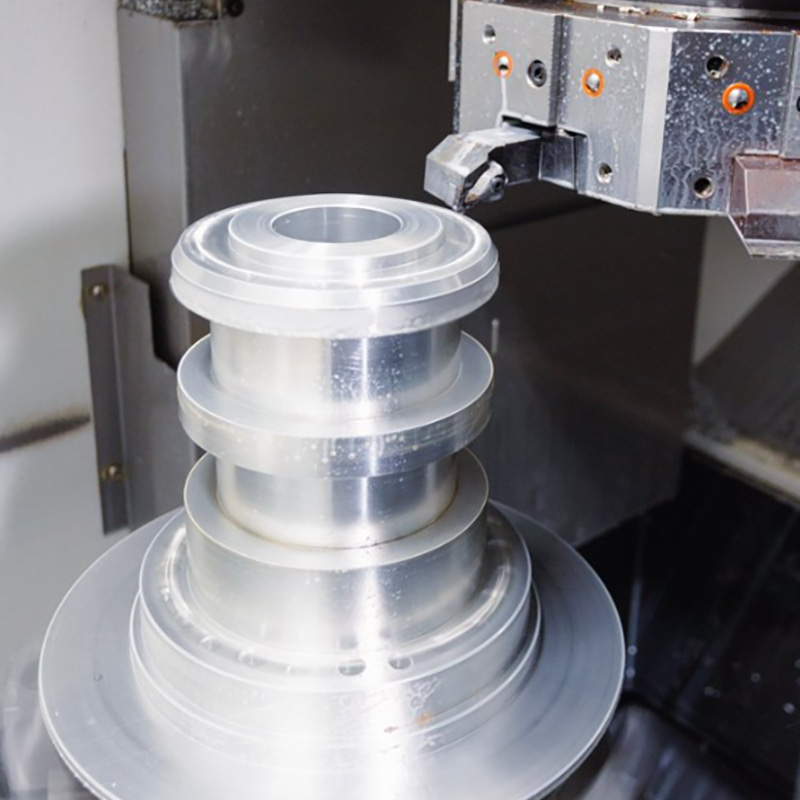
Core rotary unit of photovoltaic cell printing equipment, enabling high-precision rotation, indexing, positioning, and load bearing; rotational positioning accuracy within ±1 arcmin, repeatable positioning accuracy ±1 μm, and face runout ≤2 μm, suited to multi-station automated printing processes
|
Provides a stable, precise motion and load-bearing foundation for photovoltaic cell printing — a core component determining print quality and production efficiency, directly affecting cell conversion efficiency and production yield
|
|
Vacuum Chucking & Fixing
|
Uniformly chucks the ultra-thin photovoltaic silicon wafer, ensuring zero displacement, no warping, and no edge chipping during printing; remains stable without shifting or deforming during high-speed motion
|
Stably fixes the ultra-thin silicon wafer, preventing displacement, damage, or deformation during printing, ensuring the fundamental stability of the printing process and improving cell production yield
|
|
High-Precision Positioning & Alignment
|
Works with a CCD vision system to achieve fine angular rotation correction; repeatable positioning accuracy reaching ±1 μm/±1 arcmin level, ensuring precise busbar/grid-line print positioning
|
Precisely corrects wafer position and angle, avoiding grid-line print offset or double-printing, ensuring print alignment accuracy and providing core support for cell electrode print quality
|
|
High-Speed Stable Rotation / Indexing
|
Rapidly and precisely switches angles across multi-station printing scenarios, with precise alignment of front and back electrode print positions; rotational indexing accuracy ≤±2 arcsec, with no vibration during high-speed rotation
|
Enables efficient station changeover for multi-station printing, ensures alignment between front and back electrode prints, and avoids performance loss caused by print misalignment
|
|
Printing Process Compatibility
|
Works with the squeegee to complete printing; the turntable runs vibration-free with high stability; suited to the reciprocating motion of the printing process, free of faint printing, missed printing, or broken grid lines
|
Ensures uniform, consistent print lines, avoids print defects, improves the completeness and conductivity of cell electrode printing, and ultimately improves cell conversion efficiency
|


 English
 Español
 عربى
عربى