

 English
 Español
 عربى

DIHONG
DIHONG
DIHONG
DIHONG
DIHONG
DIHONG
DIHONG
DIHONG
DIHONG
DIHONG
DIHONG
DIHONG
DIHONG
DIHONG
DIHONG
DIHONG
Content
- 1 What Is A413.0 Aluminum Alloy?
- 2 Why A413.0 Delivers Reliable Corrosion Resistance
- 3 Real-World Corrosion Performance
- 4 Factors That Weaken or Strengthen Corrosion Resistance
- 5 Practical Tips to Maximize Corrosion Resistance in A413.0 Parts
- 6 How Dihong Aluminum Supports Corrosion-Critical Projects
- 7 Applications Where A413.0 Corrosion Resistance Matters
- 8 Comparing A413.0 with Other Aluminum Alloys
- 9 Conclusion
When engineers specify A413.0 aluminum alloy, they are usually looking for a die casting material that combines excellent pressure tightness with dependable corrosion resistance. That combination matters in hydraulic housings, automotive components, and marine hardware, where a small amount of surface degradation can lead to leaks, dimensional drift, or premature failure. This guide walks through what makes A413.0 resistant to corrosion, where its limits lie, and how to get the longest service life from your castings.
What Is A413.0 Aluminum Alloy?
A413.0 is a die casting alloy based on the aluminum-silicon system. Its silicon content typically ranges from 11% to 13%, which gives it good fluidity and castability. Iron and copper are deliberately kept low—iron below about 0.7% and copper below 0.1% in many specifications. That low copper and low iron chemistry is the foundation of its corrosion performance.
The alloy is not heat treatable in the conventional sense, so its properties come primarily from the as-cast microstructure. A fine, uniform distribution of silicon particles and a low volume of iron-rich intermetallics are what allow A413.0 to resist localized attack better than many copper-bearing die casting alloys.
| Element | Typical Range | Role in Corrosion Resistance |
|---|---|---|
| Aluminum (Al) | Balance | Forms protective oxide layer |
| Silicon (Si) | 11.0–13.0 | Improves castability; fine eutectic structure |
| Iron (Fe) | ≤ 0.7 | Low iron reduces iron-rich intermetallics |
| Copper (Cu) | ≤ 0.10 | Low copper avoids galvanic attack |
| Magnesium (Mg) | ≤ 0.10 | Minimal effect at low levels |
Why A413.0 Delivers Reliable Corrosion Resistance
Aluminum naturally forms a thin, adherent oxide layer when exposed to air. In A413.0, that passivating layer is stable because the alloy contains very little copper and controlled iron. Copper is particularly harmful in aluminum alloys because it can create local galvanic cells; when copper-bearing phases sit in an aluminum matrix, the surrounding aluminum can dissolve preferentially. A413.0 sidesteps that problem by keeping copper at trace levels.
Iron tells a similar story. In many die casting alloys, iron forms needle-like intermetallic compounds such as Al5FeSi. These particles can act as initiation sites for pitting corrosion, especially in chloride environments. A413.0 restricts iron to a lower level, so the volume fraction of those cathodic particles is smaller, and the alloy tends to corrode more uniformly if it corrodes at all.
The silicon phase also plays a role. Silicon is cathodic relative to aluminum, but when it is finely distributed in a modified or fine eutectic structure, the galvanic mismatch is small. The result is the “very good” corrosion resistance reported in standard references such as the ASM alloy digest for A413.0.
Real-World Corrosion Performance
In atmospheric exposure, A413.0 performs well. Outdoor tests and field experience show that castings maintain their appearance and mechanical integrity for years, even in industrial atmospheres with moderate sulfur dioxide and particulate levels. The natural oxide film is enough for many indoor and sheltered applications.
Marine environments are more demanding. Chlorides break down passive films on aluminum, and pitting can occur if the alloy contains vulnerable microstructural features. A413.0 does better than copper-containing die casting alloys such as A380, but it is not immune to chloride attack. For salt spray or splash-zone service, a conversion coating or paint system is strongly recommended. With a chromate-free conversion coating, A413.0 can survive hundreds of hours in neutral salt spray testing, depending on coating thickness and surface preparation.
Automotive fluids—engine oil, transmission fluid, coolant, and road salt—are another common exposure. A413.0 is frequently used for transmission cases, valve bodies, and hydraulic components because it resists these fluids while maintaining pressure tightness. However, galvanic coupling to steel fasteners or inserts can accelerate corrosion at joints. Designers should isolate dissimilar metals or use insulating washers.
Factors That Weaken or Strengthen Corrosion Resistance
Several variables decide whether an A413.0 part will last for decades or fail early:
- Environment: Chloride concentration, pH, temperature, and the presence of oxidizing agents all influence corrosion rate. Acidic or strongly alkaline conditions attack the oxide layer.
- Microstructure: Fine, uniform silicon particles and low porosity improve resistance. Coarse or acicular iron intermetallics create pitting sites.
- Surface finish: A smooth, as-cast skin is usually more resistant than a rough, porous surface. Shot blasting can help, but it must not embed iron contamination.
- Galvanic coupling: Contact with stainless steel, carbon steel, or graphite can drive aluminum into the role of anode. Use isolation or sacrificial anodes where appropriate.
- Coatings: Chemical conversion coatings, anodizing (with limitations due to high silicon), e-coat, and powder coat all add a barrier. The best choice depends on part geometry and service environment.
Practical Tips to Maximize Corrosion Resistance in A413.0 Parts
Start with good casting practice. Keep melt clean, control iron contamination, and avoid turbulence that creates oxide films and porosity. A dense, pore-free casting is the first line of defense. After casting, remove surface iron contamination from machining or blasting media. Passivate with a suitable conversion coating within a few hours of surface preparation to avoid re-oxidation.
For critical assemblies, consider a wrought aluminum alternative where corrosion resistance is the primary requirement. Our 5xxx aluminum-magnesium sheet and coil offers outstanding resistance to marine and industrial atmospheres, and it can be formed, welded, and machined into housings or brackets.
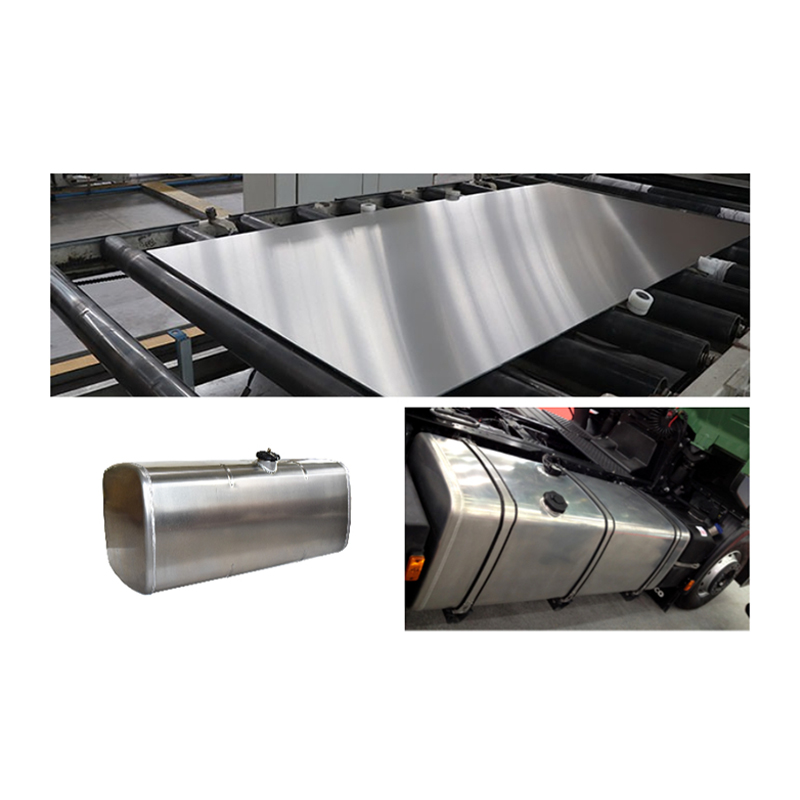 5XXX Aluminum-Magnesium Alloy Sheet & CoilIncludes: 5052, 5754, 5A06, 5082, 5083, the 5XXX series belongs to the Al-Mg-Si alloy system (5083《LF4》, 5754, 5052), with a wide range of applications, especially in ...View Product →
If your project needs machined components from cast or wrought stock, our CNC team can hold tight tolerances while preserving surface integrity.
Design details matter as well. Avoid crevices where moisture can stagnate, provide drainage paths, and specify smooth radii. When joining A413.0 to other metals, use insulating gaskets or coatings to break the galvanic circuit. Finally, document your cleaning and coating process so that every production lot receives the same protective treatment.
How Dihong Aluminum Supports Corrosion-Critical Projects
Since 2014, DIHONG has grown from an aluminum distributor into an integrated manufacturer serving aerospace, automotive, marine, and industrial customers. We hold ISO9001, IATF-16949, and AS9100 certifications, and we run production facilities in Wuxi and Suzhou, China. Our teams understand that corrosion resistance is not just a material property—it is a system property that depends on alloy selection, forming, machining, and surface treatment.
We supply aluminum sheet and coil in 1xxx through 7xxx series, custom extrusion profiles, and precision CNC machined parts. For corrosion-critical applications, we can help you compare A413.0 die castings with wrought alternatives, specify the right temper, and validate surface treatments. Our production and processing capabilities include cutting, forming, machining, and finishing, all under one roof.
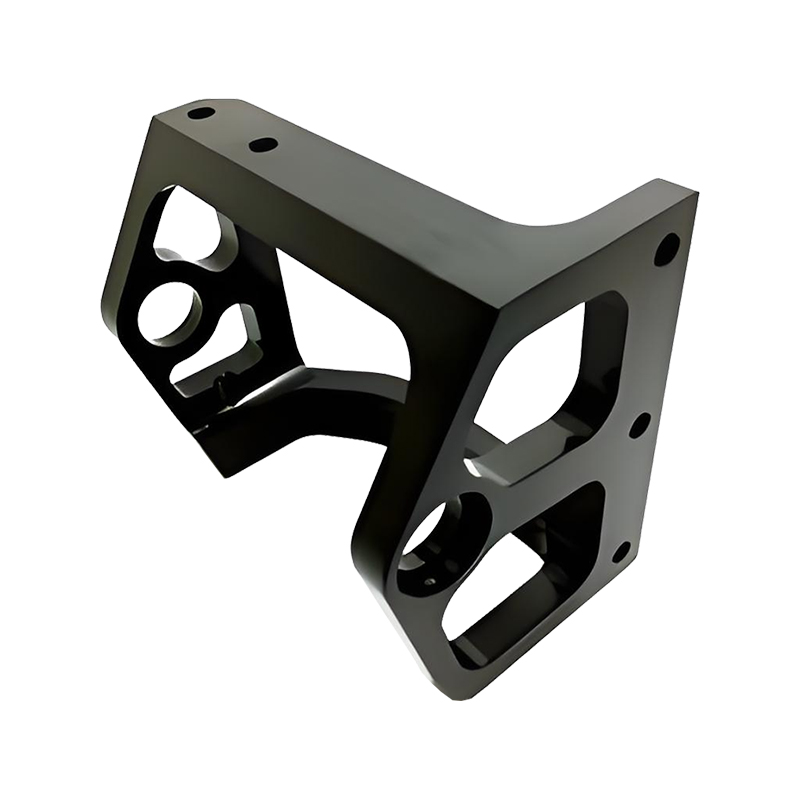 CNC Parts for Aerospace & DefenseAerospace and defense precision machined components occupy the highest tier of manufacturing specification—where dimensional accuracy, material traceability, process c...View Product →
For aerospace and defense programs, our CNC-machined components meet stringent material and inspection standards. We also work with customers in energy storage, semiconductor equipment, and industrial automation, where corrosion and contamination control are everyday concerns.
Applications Where A413.0 Corrosion Resistance Matters
A413.0 is chosen for parts that must resist moisture, road spray, and process fluids:
- Automotive: Transmission housings, valve bodies, clutch pistons, and hydraulic cylinders. The alloy’s pressure tightness and corrosion resistance reduce leak risk.
- Marine: Pump housings, fittings, and deck hardware. A413.0 outperforms copper-bearing die casting alloys in salt air, though coatings are still recommended.
- Aerospace and defense: Non-structural housings, brackets, and fluid system components where weight and corrosion resistance matter.
- Industrial machinery: Pneumatic and hydraulic manifolds, gearbox covers, and food-processing equipment (with appropriate coatings).
In each case, the alloy’s low copper and low iron content keep galvanic and pitting corrosion in check, provided the part is designed and finished properly. As the automotive industry moves toward lightweighting, aluminum castings and wrought products continue to replace heavier materials. You can read more about this trend in our article on lightweighting in new energy vehicles.
Comparing A413.0 with Other Aluminum Alloys
It helps to see where A413.0 sits relative to other common die casting and wrought alloys. The table below summarizes general corrosion behavior.
| Alloy | Typical Corrosion Resistance | Notes |
|---|---|---|
| A413.0 | Very good | Low Cu and Fe; good for castings |
| A380 | Moderate | Copper content reduces resistance |
| A383 | Moderate | Similar to A380 |
| 5xxx wrought | Excellent | Best for marine environments |
| 6xxx wrought | Good | Good balance of strength and corrosion |
This is a simplified view. Actual performance depends on temper, surface finish, and exposure conditions. If you need help selecting the right alloy, our engineers can review your application and recommend a material that balances castability, strength, and corrosion life.
Conclusion
A413.0 aluminum alloy earns its reputation as a corrosion-resistant die casting material through careful chemistry: high silicon, low copper, and controlled iron. It resists atmospheric and many fluid environments well, and with proper design and surface treatment, it can serve reliably in marine and automotive applications. For projects that demand even greater corrosion resistance, wrought 5xxx or 6xxx alloys may be a better fit, and our team at DIHONG is ready to help you compare options. Whether you need sheet, extrusion, or precision machined parts, we bring decades of aluminum experience to your corrosion-critical challenge.