

 English
 Español
 عربى

DIHONG
DIHONG
DIHONG
DIHONG
DIHONG
DIHONG
DIHONG
DIHONG
DIHONG
DIHONG
DIHONG
DIHONG
DIHONG
DIHONG
DIHONG
DIHONG
Content
Every aluminum product begins as a decision about chemistry. Long before a die is cut or a billet reaches the press, someone has to answer a deceptively simple question: which elements go into the melt, and in what amounts? That question sits at the heart of custom aluminum alloy chemistry, and it is one we work through with customers almost every day at our plants in Wuxi and Suzhou. This article explains what "custom" really means in practice, where the genuine freedom lies, and what information helps a supplier hit your target on the first heat.
What Custom Aluminum Alloy Chemistry Really Means
Registered wrought alloys are defined by composition ranges rather than single numbers. The Aluminum Association lists 6061, for instance, with silicon anywhere from 0.40 to 0.80 percent and magnesium from 0.8 to 1.2 percent. Two heats that both certify as 6061 can therefore behave quite differently on the same extrusion press, and that gap is where most practical alloy conversations begin.
Custom chemistry usually takes one of three forms. The mildest is tightening a registered window around a comfortable target so that heat-to-heat variation shrinks. The next is deliberately shifting the balance of elements inside the registered limits, trading one property for another. The last is developing a composition that fits no existing family, which is precisely why the 8xxx series exists.
The Alloying Elements and What Each One Contributes
It is more useful to think of an alloy as a system than as a shopping list. Elements interact: magnesium and silicon pair up to form Mg2Si, copper and magnesium create their own phases, and small additions of chromium or zirconium change how grains grow during casting and hot working.
| Element | Primary effect | Where it appears |
|---|---|---|
| Copper (Cu) | Raises strength after heat treatment; reduces corrosion resistance | 2xxx, some 7xxx |
| Magnesium (Mg) | Solid-solution strengthening; improves corrosion resistance and weldability | 5xxx, 6xxx, 7xxx |
| Manganese (Mn) | Forms dispersoids that control grain structure and add strength | 3xxx, 5xxx |
| Silicon (Si) | Pairs with magnesium for precipitation hardening; improves flow in casting | 4xxx, 6xxx |
| Zinc (Zn) | With magnesium, forms the phases behind the highest strengths | 7xxx |
| Iron (Fe) | Mostly an impurity; forms hard phases but can limit grain growth | All series, tightly limited |
| Chromium (Cr) | Refines grain structure; improves stress-corrosion resistance | 6xxx, 7xxx |
| Titanium (Ti) | Grain refiner in ingot casting | Most series |
| Zirconium, scandium, lithium | Special-purpose additions for recrystallization control or weight reduction | 8xxx and specialty grades |
The magnesium-to-silicon ratio in 6xxx shows why numbers matter in combination rather than in isolation. Push silicon toward the top of the range and the alloy quenches and ages readily, which suits high-speed extrusion of thin walls. Push magnesium higher and you gain strength and corrosion resistance at some cost in extrudability. Neither version is better in the abstract; only the die, the press and the end use decide.
 6101 Aluminum-Magnesium Alloy Raw Material for Conductive ProfilesFor conductive busbar and bus-strip applications, this Al-Mg-Si alloy supports extrusion, CNC machining, punching and anodizing.View Product →
How a Custom Chemistry Is Actually Defined
Start With a Base Alloy and Temper
Almost every project starts from a registered alloy and a temper, because that combination already carries published mechanical, corrosion and fatigue data. If your part is a 6061-T6 profile or a 5052-H32 panel, the conversation is about consistency rather than invention.
Tighten the Window Around Your Process
This is where most custom work happens. A press running thin-wall profiles may want silicon held near the top of the range for flow, while a heavy section that quenches slowly may prefer leaner silicon with more magnesium. On the rolling side the same logic applies: iron and silicon levels influence earing in deep-drawn sheet, and a controlled manganese range keeps grain size predictable after annealing. We look at the real process window, from billet temperature and extrusion ratio to quench rate and reduction schedule, before proposing numbers.
Decide Whether a New Composition Is Justified
A genuinely new composition brings new qualification testing, new tooling assumptions and a longer lead time. It usually makes sense only when a requirement cannot be met inside any existing window, for example an extrusion that must combine high thermal conductivity with a specific anodized finish.
 Custom Aluminum Extrusion Profiles for Electronics, Energy Storage and AerospaceCategory covering custom profiles in alloys such as 6063, 6061, 6101 and magnesium AZ31, with die development, machining, anodizing and cutting.View Product →
Where Chemistry Drift Shows Up Later
Chemistry problems rarely announce themselves at the furnace. They surface weeks later, at a station where nobody expects them.
- Tearing or die lines on an extrusion, often from silicon or iron sitting outside the intended band.
- Batch-to-batch anodizing color differences caused by traces of copper or zinc in an alloy meant to be nearly free of them.
- Cracking after quenching, when copper or magnesium is too high for the quench rate the section can realistically achieve.
- Earing or uneven drawing in coil, where the iron-to-silicon balance has shifted the texture.
- Short tool life or built-up edge in machining, traced to hard silicon or iron-bearing particles.
None of this argues against custom chemistry. It argues for choosing a target composition with the entire route in mind: casting and homogenizing, extrusion or rolling, heat treatment, machining and finishing.
Matching Chemistry to the Application
Different industries pull the same alloy families in different directions. A few patterns we see regularly:
- Aerospace and defense work leans on 2xxx and 7xxx grades, where tight control of copper and zinc supports damage tolerance.
- Consumer electronics and wearables favor 6xxx extrusion alloys chosen for finish quality and dimensional repeatability after anodizing.
- Energy storage and photovoltaic mounting use 5xxx and 6xxx sheet selected for corrosion resistance and weldability.
- Semiconductor equipment and industrial automation call for free-machining grades and stress-relieved plate that stays flat through machining.
- Automotive lightweighting needs 6xxx chemistry balanced between strength, extrudability and recycled input.
When a part moves from a billet to a finished component, material standards end up mattering as much as the composition itself, a point we explored in our note on precision and material standards for CNC parts.
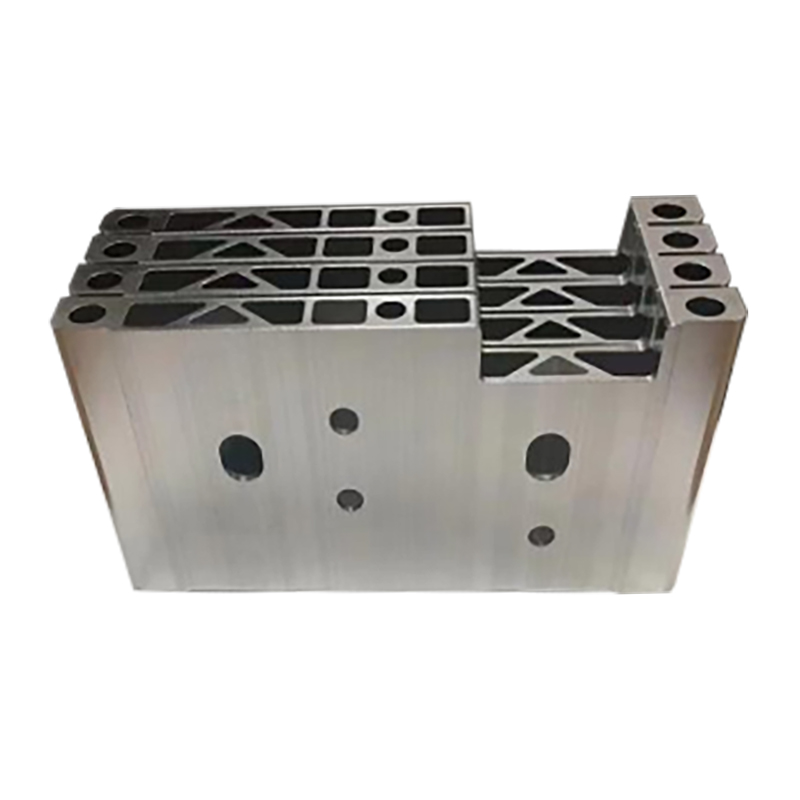
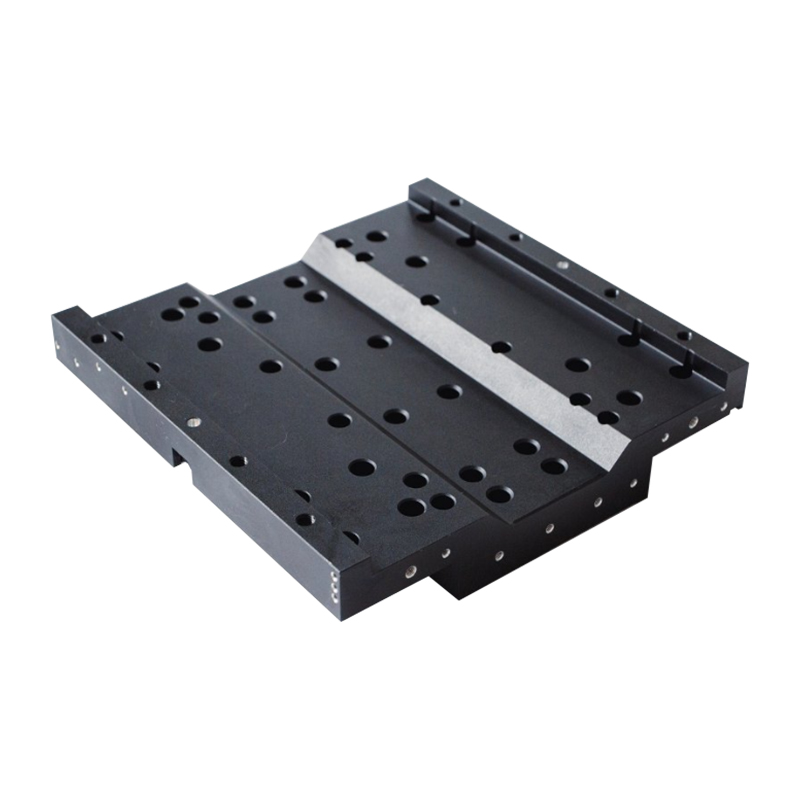 Custom Precision CNC Machined Parts for Industrial, Semiconductor and AerospaceMachining category covering multi-axis milling, turning, drilling and boring for prototypes and production, with alloy selection, inspection and traceability support.View Product →
What to Send With an Inquiry
Five pieces of information let us answer quickly and accurately:
- The alloy and temper you are working from, or the property targets if there is no incumbent.
- Product form and size: sheet, coil, extruded profile or a finished machined part.
- The processes the material will meet, including extrusion ratio, heat treatment, welding, anodizing and machining.
- The limits you actually care about, whether that is tensile strength, conductivity, surface finish or flatness.
- Order volume and how much variation between heats your production can absorb.
With those five, we can usually suggest either a registered alloy that fits or a narrower window that fits better. Because our extrusion, rolling and machining capabilities sit under one roof, a proposed window can also be tested against real equipment before it becomes a written specification.
Questions Buyers Ask Us Often
Can we order a chemistry tighter than the standard range?
Yes, within reason. What matters is whether the tighter window stays comfortable for the casting and homogenizing practice involved. Extremely narrow windows raise cost and rejection rates, so we usually recommend the loosest band that reliably delivers the property you need.
Does custom chemistry change how the material is certified?
It can. Material inside a registered composition can still be certified against that alloy, while a composition outside every registered range is typically supplied against an agreed specification with its own test certificate. Either way, the chemistry report should travel with the heat.
How long does the discussion take?
For a narrowed window inside an existing alloy, often a matter of days. A new composition requiring trial heats and requalification is a project measured in weeks or months, and it is worth planning for early.
If you are weighing a chemistry change, the most useful thing you can do is describe the problem in plain terms: the section that will not extrude, the finish that will not match, the part that will not hold tolerance. Alloy numbers follow from that, not the other way around.